
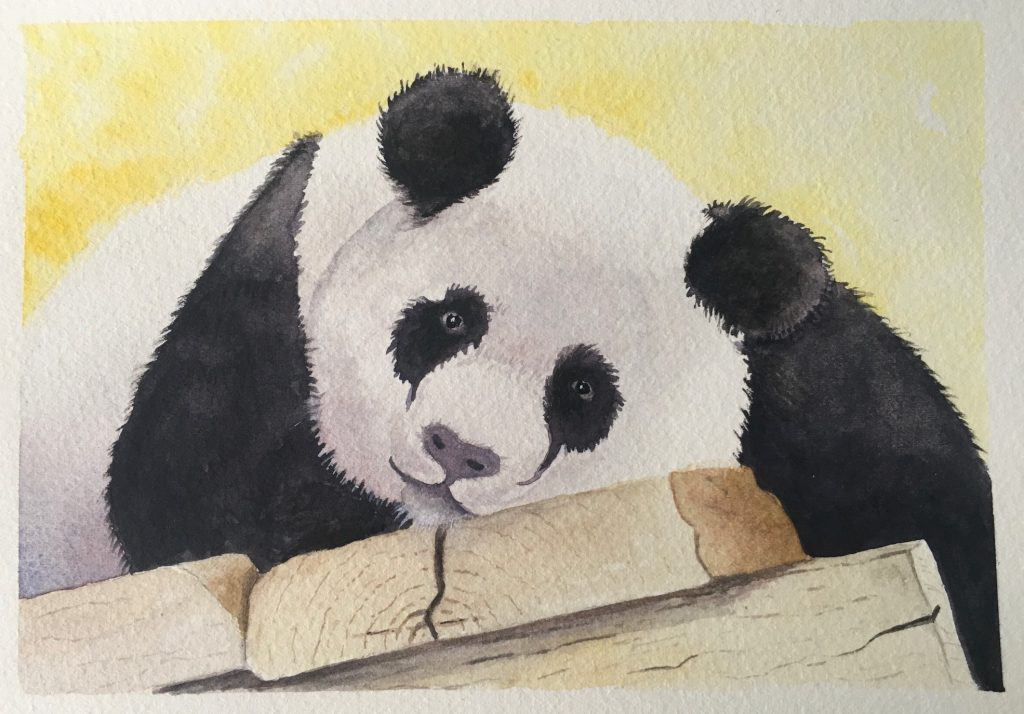
This isn’t my best watercolour, but it represents a significant progress step in my watercolour journey. Just over 2 months ago, before I started with the Paint Wild Academy, this picture wouldn’t have been finished … so much went wrong … I would have ripped it from the board and would not have published it !
It started immediately. The very first strokes, the pale wash on the bottom left of the white fur (white is so often not white at all !) granulated and the mixed paint (the black is in fact a really strong dark purple based colour) separated in to red and blue.
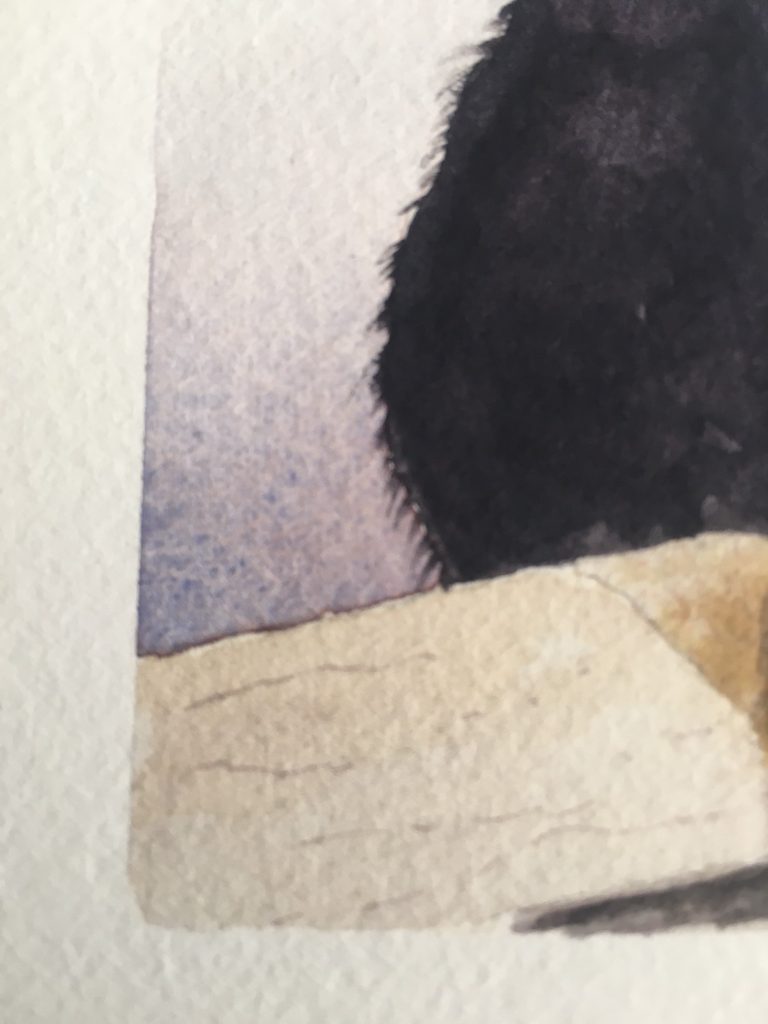
Next, I failed to flick out the tiny fur strokes on the left hand shoulder quickly enough. The watercolour had already started to dry and it created a horrible hard edge. Then I got the left hand ear wrong and it looked like a round pom-pom stuck on the panda’s head.
I was pretty happy how the wood was starting to look when I realised that I hadn’t looked at the refence picture for a while and I’d missed that the right hand end was in direct sunlight and actually had a strong highlight.
Previously I would have given up at this stage, got frustrated with how difficult watercolour can be some days and probably resorted to getting out a canvas and painting something in acrylics to renew my confidence.
However, three important things I’ve learnt from the Academy are:
1) paintings can go through an ugly stage (so stay with it)
2) there is artistic license (and your audience hasn’t seen the reference photo!)
3) it’s worth trying to fix it (what’s the worst that can happen …. you were going to rip it from the board anyway)
… so I ploughed on.
I decided the colour split granulation actually produced a reasonable effect so left it alone. I scrubbed the hard shoulder line and, while it is still visible in the picture, it is now much softer than it was. I reworked the ear so it followed a better shape (it is slightly larger now then the other ear but no longer looks like a pom-pom). I darkened the right hand side of the timber to make it look like a natural bark rather than bleached out by the sun.
The overall result was pretty good and, more than that, I demonstrated to myself that I’m making progress in my attempt to wrestle some control over this fickle medium.
To those that do, happy painting … and to those that just look, I hope the picture may have brought about a smile.